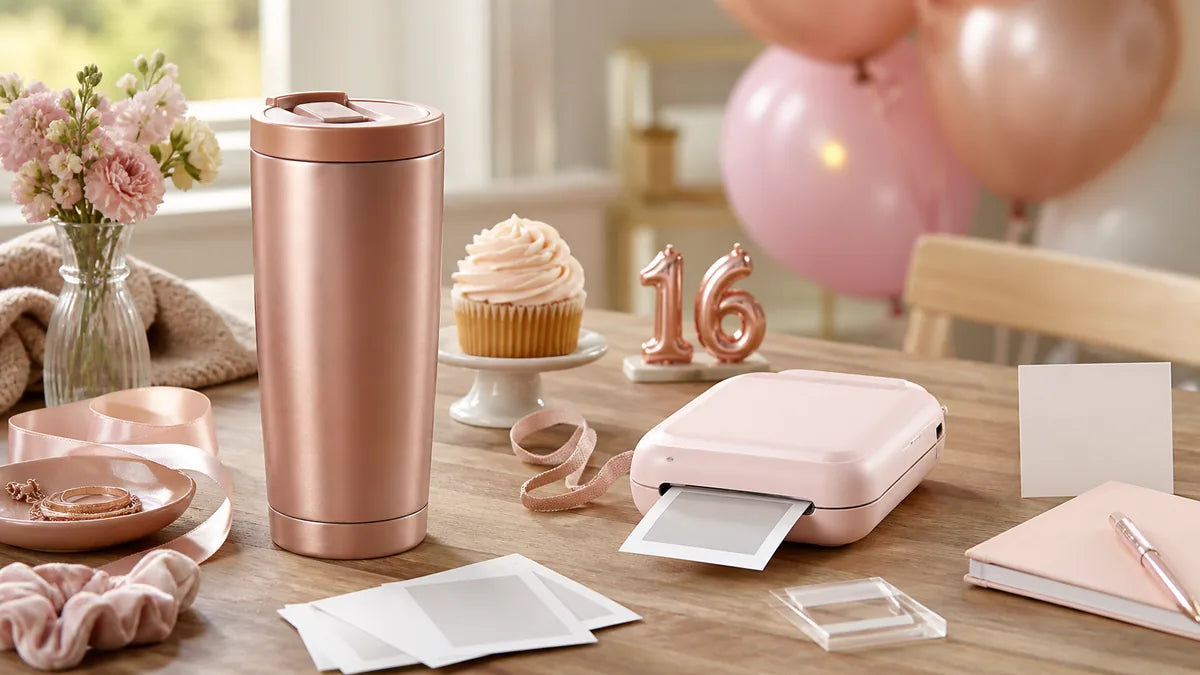
A Sweet Sixteen fits best when the teenager genuinely sees 16 as a milestone and has a real say in how it is celebrated. It can be a formal party, a backyard gathering, a day out with friends or simply a birthday with a little extra meaning. What it should not be is a compulsory pageant staged around a teenager who would rather be anywhere else.
Searching for "sweet sixteen origin" can produce a suspiciously tidy tale about one ancient custom starting the whole thing. The reality is more interesting. Sweet Sixteen developed from several coming-of-age ideas, became especially recognisable in North American popular culture and has since been reshaped by families around the world. Its modern value comes less from copying the past exactly and more from deciding whether the tradition suits the person turning 16.
The tradition has several roots, not one neat birthday
There is no widely accepted founder, date or single ceremony behind Sweet Sixteen celebrations. Sixteen has long been treated as a transitional age in parts of Europe and North America, particularly for young women, but the modern birthday party cannot be pinned conclusively to one historical event. Related customs included formal presentations of young women into society, debutante traditions and family observances marking greater social responsibility. Those practices helped create a broader idea of mid-adolescence as a turning point, but none can claim sole ownership of the cake.
It is also important not to collapse distinct traditions into one. A quinceañera, for example, marks a 15th birthday within particular Latin American cultural and, for some families, religious contexts. It is not an earlier version of a Sweet Sixteen. Debutante events likewise had their own class, social and gender meanings. A modern family can admire those celebrations without borrowing their rituals and relabelling them.
The recognisable Sweet Sixteen party became especially associated with the United States and Canada, where turning 16 could coincide with new independence, changing school and social expectations, work opportunities or driving privileges. Songs, films, television and youth culture helped turn the phrase into a familiar birthday shorthand. Historically, it was most often applied to girls. Today, families may use it for teenagers of any gender-or skip the label entirely while still treating 16 as significant.
In Australia, 16 is not legal adulthood, and specific rights or responsibilities vary between states and territories. That makes the occasion a symbolic milestone rather than a universal legal one. It can mark growing independence, a first job, senior school years, expanding friendships or the point at which a young person begins making more decisions for themselves. For a deeper look at how those strands came together, explore the origin of Sweet Sixteen celebrations.
That flexible history is useful. It means there is no authenticity police waiting to confiscate the birthday cake because the party did not include 16 candles, a tiara or a choreographed entrance. The best modern version keeps the milestone and loses whatever does not suit the teenager.
Use this occasion-fit checklist before deciding how to mark the milestone:
- Ask what kind of celebration the recipient would genuinely enjoy.
- Match the scale of the event to the family, friendship group and budget.
- Keep the focus on the young person rather than copying a tradition automatically.
- Choose a gift or gesture that fits your relationship and the tone of the occasion.
- Check cultural and family expectations before planning ceremonial details.
- Prefer a thoughtful, age-appropriate moment over an unnecessarily elaborate production.
Case one: the teenager who wants a genuine milestone
Imagine Ava has talked about her 16th birthday for months. She enjoys dressing up, wants grandparents and friends in the same room and likes the idea of photographs she will keep. In this case, a clearly labelled Sweet Sixteen works. The name signals that the event is more significant than the usual birthday dinner, while the gathering gives different parts of her life a chance to meet.
The celebration does not need to imitate a formal debut. It might include a favourite venue, a chosen colour scheme, a short family toast and a display of photographs from earlier birthdays. A candle-lighting or "16 messages" moment can be meaningful if Ava asks for it. If she finds the idea sentimental in a good way, excellent. If she finds it mortifying, delete it from the run sheet before it develops a microphone.
This is also where occasion pressure can quietly inflate the budget. Parents may feel that calling the event a Sweet Sixteen requires a large venue, elaborate styling and a major gift. It does not. Decide first which part matters most to the teenager: bringing people together, dressing up, receiving a lasting gift or having an experience. Spending heavily across every category can create more stress without making the birthday more personal.
A larger celebration works here because the recipient enjoys attention and understands the plan. It fails when the event becomes a showcase for the adults organising it. Warning signs include surprise guest lists, speeches the teenager has not approved, or a theme chosen mainly because it will look impressive in photos. A milestone party should make the guest of honour feel recognised, not managed.
Gift choices can follow the same logic. A close relative might choose a keepsake with a written message, while friends may prefer something connected to a hobby or everyday life. Electronics and gadgets can suit a tech-minded teenager, but only when the buyer knows their device compatibility, household rules and actual interests. "It has buttons" is not quite enough research.
For Ava, the Sweet Sixteen tradition fits because she wants the symbolism, the social energy and the memories. Give her decision-making power and the occasion feels celebratory. Take that power away and the very same party can feel like an oddly expensive ambush.
Case two: the teenager who would rather skip the spotlight

Now consider Eli, who dislikes formal clothes, does not want extended family watching him open gifts and would choose five close friends over a crowded function room. Declaring that "everyone gets a Sweet Sixteen" is likely to go down about as well as announcing a surprise public speech. Yet the milestone can still fit-just in a quieter form.
Eli might prefer takeaway, a film night, an outdoor activity or an evening built around games. In that setting, the significance comes from being allowed to shape the day. A handwritten note from family, a favourite meal and uninterrupted time with friends can do more emotional work than decorations spelling out a number in metre-high lettering.
An activity-led celebration also solves a common party problem: guests need something to do beyond standing near the snacks and checking their phones. When the group enjoys playful competition, family games and group activities can provide structure without making the night feel like a formal program. Check the suggested age, player count, content and typical play time before choosing. Anything designed around alcohol or adult-only humour is plainly unsuitable for a 16th birthday, regardless of how "grown-up" the occasion is supposed to feel.
The Sweet Sixteen label works for Eli only if it remains light. It might appear in the invitation or birthday card without dictating the entire event. He can mark 16 as meaningful without performing a traditional ceremony. That distinction matters because introversion is not ingratitude, and discomfort with attention is not a planning obstacle to be overcome.
This version fails when adults treat low-key as disappointing. Adding surprise guests, a ceremonial entrance or an extended photo session may seem like an upgrade to the organiser and a social endurance test to the teenager. A useful rule is to ask whether the special element adds enjoyment for the birthday person or merely makes the occasion look more substantial from the outside.
Gift giving should be equally restrained. A small hobby-related item, room or desk accessory, practical gadget or game may suit better than a formal keepsake with emotional expectations attached. Novelty can work when the giver understands Eli's humour; otherwise, the joke risks becoming clutter with a punchline. Here, thoughtfulness means noticing how he actually spends his time.
For Eli, the tradition succeeds once it stops insisting on spectacle. The milestone remains. The spotlight does not.
Case three: the family creating a tradition of its own

Sam's family has never held a Sweet Sixteen, but relatives have seen the idea in films and online. They like the thought of pausing at 16 to recognise how much Sam has grown. Sam is interested too, although nobody wants to pretend the family is continuing a ceremony passed down through generations.
This is a good context for adaptation. The family can be honest that the celebration is new to them and build it around their own relationships. They might choose 16 favourite photographs, collect short notes from important people, serve a meal selected by Sam or make a playlist covering different stages of childhood. None of these elements requires a grand historical claim. They simply give the birthday a clear emotional centre.
A new family tradition works when it feels specific. "We want to celebrate the person you are becoming" carries more weight than "social media says 16 should be enormous". It can also include family heritage where appropriate: a familiar dish, music the household loves or a gathering style that already belongs to them. The aim is not to make the occasion culturally neutral. It is to use the family's own customs rather than casually copying someone else's rite of passage.
The celebration becomes awkward if it borrows recognisable rituals from a quinceañera, bar or bat mitzvah, debutante presentation or another culturally specific observance without understanding their meaning. Those events are not decorative menus from which to select the most photogenic parts. If another milestone tradition genuinely belongs to the family, let it stand on its own terms instead of squeezing it into a Sweet Sixteen theme.
Budget matters here because "starting a tradition" can sound more financially dramatic than it needs to be. A home gathering with meaningful contributions from relatives may feel more grounded than a costly event assembled from generic trends. The gift can be modest if the celebration itself carries the message. Conversely, a small party can sit comfortably alongside one significant present when that reflects family circumstances and the teenager's wishes.
When gift ideas are still fuzzy, a broad gift guide organised for discovery can help the family compare practical, playful and sentimental directions before choosing. Start with Sam's interests and daily life, then consider whether the present should be used immediately, kept for years or shared during the celebration. The category should follow the person-not the number on the cake.
For Sam's family, Sweet Sixteen fits because it provides a reason to pause and acknowledge change. It fails only if they mistake borrowed formality for meaning. A tradition becomes genuine through repetition, choice and family memory, not because somebody ordered matching chair covers.
Case four: the guest choosing a gift without overplaying the occasion
Jordan has been invited to a classmate's Sweet Sixteen at a hired venue. The invitation looks polished, the dress code is smarter than usual and Jordan is now wondering whether a milestone birthday demands an expensive present. This is where the name can create unnecessary panic.
A formal party does not automatically set a high gift budget. Relationship matters more than the venue. A classmate or casual friend can choose a modest gift that reflects a known interest. Close friends might pool funds for something more substantial or create a personal gift together. Relatives may lean towards a keepsake, a future-use item or something connected to a developing hobby. None of those groups needs to compete with the cost of the party.
The invitation offers useful clues. Look for gift instructions, a stated theme, the type of activity and whether the teenager has shared any interests or preferences. If nothing is mentioned, ask a parent, sibling or close friend rather than making assumptions. This is especially important for technology, clothing, collectables and hobby equipment, where compatibility, sizing and duplicate risk can turn a promising idea into an administrative task.
For a classmate or group exchange, gifts under $30 can help keep spending proportional to the relationship. Choose one clear idea rather than padding the present with random extras. A game-night enthusiast might appreciate something social; a practical teenager may prefer a useful desk or travel item; someone with a playful room might enjoy an unusual decorative piece. The point is to recognise their personality without acting as though turning 16 has transformed them overnight into a completely different species.
Avoid gifts that confuse "coming of age" with adulthood. Alcohol, drinking accessories, risqué items and other adult-coded presents are inappropriate for a 16-year-old, even if the party has evening wear and dramatic lighting. The same caution applies to jokes about driving, dating or appearance. Humour works when the recipient would laugh first-not when everyone else gets entertainment at their expense.
If the relationship is not close enough to reveal a hobby, browsing top-selling gift categories can show familiar directions without forcing a highly personal guess. Check whether the idea is age-appropriate, useful in the recipient's life and manageable in their available space. A giant decorative object may be memorable, but so is discovering there is nowhere to put it.
Jordan's case shows why a Sweet Sixteen invitation should be read as a celebration cue, not an invoice. Match the gift to the recipient and relationship, acknowledge the milestone in the card and let the host family handle the scale of the event.
Ultimately, Sweet Sixteen fits the occasion when it gives a teenager a welcome way to mark growing independence. It can be polished or scruffy, sentimental or activity-led, crowded or tiny. The history provides the idea; the teenager provides the shape. Once that is clear, follow the most relevant path-compare by budget, activity or usefulness, or begin with LatestBuy's gift discovery page and browse with the actual 16-year-old in mind.
Common questions about a sweet sixteen

What does a sweet sixteen celebrate?
A sweet sixteen marks a transition in the teenager's life, but its meaning varies between families and cultures. It can be a formal coming-of-age occasion, a relaxed birthday gathering or simply a chance to recognise growing independence. The best interpretation is the one that feels authentic to the recipient.
Does every teenager want a large sweet-sixteen party?
No. Some teenagers enjoy a large event, while others prefer dinner with family, a small activity with friends or a low-key day. Ask about comfort, guest preferences and budget before assuming that tradition requires a particular format. Recipient fit matters more than the size of the celebration.
How should a gift fit the occasion?
Choose according to your relationship with the recipient and the tone of the event. Close family may favour something lasting or personal, while friends can choose a shared-experience or interest-led gesture. Keep it age-appropriate, avoid making unsupported assumptions, and let thoughtfulness carry more weight than price.
For the next browse step, compare the fit against electronics and gadgets and Family Games.