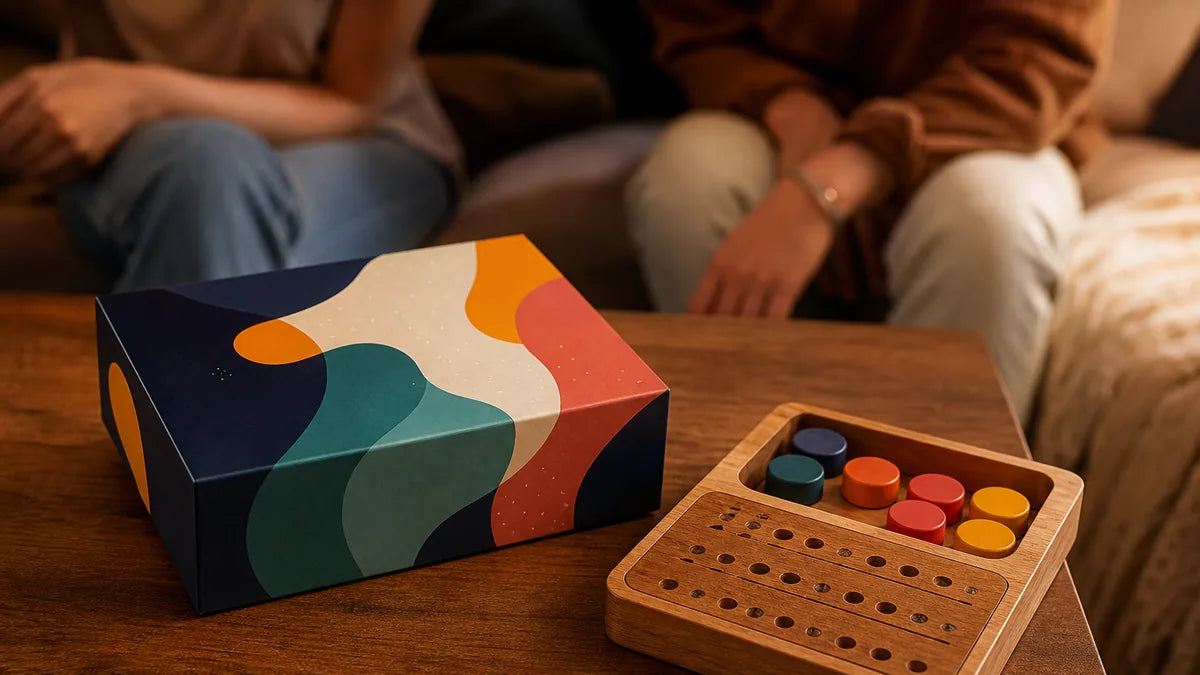
The best drinking games and party games for small groups are the ones that match the room before they match the rulebook. Start with your group size, pick a comfort level, make alcohol optional rather than compulsory, and choose a game style that gives everyone an easy way in. For most hosts, the winning formula is simple: low-pressure rules, quick turns, plenty of water and snacks, non-drinking swaps, and a game that can stop before the fun turns into a logistical incident.
Small-group hosting is a different beast from the big party circus. With four to eight people, every turn matters, every awkward rule is louder, and nobody can hide behind a conga line. The good news? That also means the right game can become the whole night: a clever card game, a ridiculous challenge, a fast party prompt, or a drinking-optional twist that keeps the laughs moving without making anyone feel boxed in.
Use this guide to choose by group size, host confidence, guest vibe and safer hosting comfort - then browse the LatestBuy games collection when you know which lane suits your table.
Choose the game by group size first
Small groups need games that create momentum quickly. A game that works beautifully with twelve people can fall flat with three, while a tight card game may become chaotic in a crowd. Before you think "drinking game", think "how many actual humans will be sitting there, paying attention, and waiting for their turn?"
Here's the quick route:
| Group size | Best game style | Why it works | Host watch-out |
|---|---|---|---|
| 2-3 people | Compact card games, trivia, storytelling prompts, mini challenges | Everyone gets frequent turns and the pace stays alive | Avoid games that rely on voting, elimination or team chaos |
| 4-5 people | Party card games, bluffing games, quick board games, light drinking-optional rules | Enough personalities for banter without rules dragging | Keep turns short so one confident guest does not dominate |
| 6-8 people | Team games, guessing games, prompt games, activity-led games | The room has enough energy for reactions and running jokes | Use clear opt-outs and avoid pressure-based penalties |
| Mixed drop-in group | Flexible games with no heavy setup | Guests can join or leave without breaking the night | Skip complex campaigns or long scorekeeping |
Match the game to your host comfort level
Not every host wants to referee a tournament, explain seventeen rules, or become the unofficial minister for beverage pacing. Your comfort matters. If you want low effort, choose games that explain themselves. If you like being the ringmaster, pick something with prompts, challenges and a little theatrical nonsense. Both are valid. One just requires less clipboard energy.
Use this comfort ladder before choosing:
| Host comfort level | Pick this style | Good for | Avoid |
|---|---|---|---|
| "Please don't make me explain much" | Simple card games, quick prompts, classic guessing games | Casual drinks, first-time guests, quiet groups | Complex scoring, long setup, rule-heavy board games |
| "I can guide the vibe" | Party games with rounds, voting or team play | Birthdays, dinner parties, close friends | Games that punish shy guests or require constant drinking |
| "I enjoy controlled chaos" | Activity challenges, timed rounds, performance prompts | Lively groups who know each other well | Anything that embarrasses guests who did not sign up for it |
| "I want alcohol optional" | Any game with sip-free penalties or token-based scoring | Mixed drinkers and non-drinkers | Rules where alcohol is the only way to participate |
Pick a game style that suits the guest vibe

The right party game is partly about personalities. A loud group might love bluffing and ridiculous prompts. A quieter group may prefer trivia, co-operative puzzles or games where the joke is in the card, not in being put on the spot. If your guests include partners, workmates, neighbours or new friends, go easy on games that depend on oversharing or humiliation. The table should feel like a laugh, not a tribunal with snacks.
Here are the main small-group lanes:
- Prompt and question games: Best for conversation, getting-to-know-you nights and mixed groups. Keep the questions light if the group is new.
- Trivia games: Great for guests who like a little competition without personal exposure. Bonus: it is easy to play with non-alcoholic drinks, tea, soft drink or nothing at all.
- Bluffing and guessing games: Good for close friends who enjoy reading each other. Keep rounds short to avoid analysis paralysis.
- Activity and challenge games: Excellent for energetic groups, but only when everyone is comfortable being watched.
- Card-based party games: Portable, quick to reset and easy to gift. Ideal when you want the game to appear without bringing half a cupboard.
- Board games with party energy: Better for hosts who have time and table space. Choose lighter rules for casual nights.
Keep alcohol optional without killing the fun
A responsible party game does not need to be boring. It just needs to avoid making drinking the scoreboard, the punishment or the proof that someone is "playing properly". Alcohol can be present for adults who choose it, but the game should still work for people who are not drinking, are pacing themselves, are driving, are on medication, are pregnant, are taking a break, or simply do not feel like it. No speech required, no courtroom defence, no weird pressure.
Use these swaps to make drinking games more flexible:
| Traditional rule | Safer swap | Why it works |
|---|---|---|
| "Loser drinks" | Loser gives up a token, draws a prompt, or chooses the next category | Keeps the consequence playful without linking fun to alcohol |
| "Everyone drinks when..." | Everyone does a quick action: point, vote, clap, swap cards, take a snack break | Maintains group rhythm without compulsory drinking |
| "Finish your drink" | End the round, reset the cards, or take a water pause | Avoids competitive or excessive drinking framing |
| "Truth or drink" | Truth, pass, or harmless challenge | Builds consent into the rules |
| "Drinking team penalty" | Team loses a point or takes a bonus trivia question | Keeps competition in the game, not the glass |
Use the safer hosting checklist before the first round

Good hosting is mostly invisible. When it works, guests just feel relaxed, included and able to enjoy themselves. When it fails, everyone remembers the rules argument, the empty snack bowl, or the moment someone had to announce they were not drinking to a room full of amateur prosecutors. A quick checklist saves the vibe before it gets wobbly.
Before guests arrive, set up the game area so choices are easy:
- Clear table space: Enough room for cards, glasses, snacks and elbows. Elbows are underrated infrastructure.
- Water in reach: Jugs, bottles or glasses on the table so hydration does not require a solo expedition.
- Food early: Salty, savoury or substantial snacks before the game starts, not just after everyone is already hungry.
- Non-alcoholic drinks visible: Make them part of the spread, not a secret option in the back of the fridge.
- Opt-out language ready: Try "You can always pass, swap or take a non-drink option" before round one.
- Pacing plan: Short rounds, reset breaks and a natural finish point.
- Transport plan: Check rideshares, designated drivers, public transport or staying-over arrangements where relevant.
- Stop signal: If the game starts making someone uncomfortable or too affected by alcohol, pause or change games.
Choose better adjacent gifts when they already own the basic drinking gadget
A lot of people already have the classic party basics: bottle opener, novelty glassware, cocktail shaker, ice tray, maybe something shaped like it was purchased during a very confident weekend. If they already own the obvious gadget, the better gift is often the adjacent thing that makes hosting easier, more personal or more replayable.
Think in upgrades, not duplicates:
| If they already have... | Choose this instead | Why it is more useful |
|---|---|---|
| Novelty shot glasses | A compact card or party game | Adds an activity, not just another vessel |
| A bottle opener | A trivia or conversation game | Gives guests something to do once drinks are poured |
| A cocktail shaker | A hosting-friendly game with optional alcohol rules | Supports mixed drinkers and non-drinkers |
| A big board game collection | A fast, portable party game | Works when guests want quick laughs, not a three-hour campaign |
| A speaker or party light | A table game or challenge deck | Turns atmosphere into interaction |
| Lots of bar accessories | Snacks, game-night extras or practical entertaining gadgets | Rounds out the hosting setup |
Make the night flow with a simple game plan

Even the best game can flop if it appears at the wrong time. Small-group nights usually work best with a gentle arc: arrival, food, easy opener, main game, optional final round, then a graceful stop. You do not need a laminated itinerary. In fact, please do not laminate the itinerary unless the joke is very clear. You just need a rhythm.
A practical flow looks like this:
- Arrival and settling in: Drinks, food, chat. No rules yet.
- Warm-up round: A simple prompt, trivia question or quick card game to loosen the room.
- Main game: The one with the most laughs, but also the clearest opt-outs.
- Reset break: Water, snacks, bathroom, music change, fresh air if needed.
- Final round: Keep it short and optional. End while people still want more.
- Wind-down: Switch to conversation, lighter games or background music.
FAQ: Drinking games and party games for small groups
What is the best type of drinking game for a small group?
The best type is a game with short rounds, simple rules and optional drinking mechanics. Card games, trivia, bluffing games and prompt-based party games usually work well for three to eight people. Avoid games where the only consequence is drinking, and build in non-drinking options such as tokens, bonus questions, passes or harmless challenges.
How do you make drinking games safer for guests who do not drink?
Make alcohol optional from the start. Say that guests can pass, swap in a non-drinking penalty, use water or soft drink, or simply play without a drink. Keep water and food visible, avoid pressure-based rules, plan transport, and stop or change games if someone is uncomfortable or has had enough.
What party games work well with four people?
For four people, choose compact games with frequent turns: trivia, guessing games, quick card games, bluffing games and conversation prompts. Team games can work if the rules are simple, but avoid games that need a large crowd for voting, elimination or chaotic reactions.
Is a drinking game a good gift?
It can be a good gift when the recipient enjoys hosting and the game works without forcing alcohol. For a safer choice, pick a party game, trivia game or card game that can be played with or without drinks. If they already own drinking accessories, choose a replayable game or useful hosting add-on instead of another basic gadget.
Find the game that fits the table, not just the theme
Small-group party games work best when they feel easy to join, easy to pause and easy to enjoy without pressure. Choose by group size first, match the game to your host comfort level, make alcohol optional, and keep a few safer swaps ready. If the recipient already has the basic drinking gadget, go one step more useful: a replayable game, a quick card set, a trivia night helper or a practical hosting add-on.
Ready to build the night? Start with LatestBuy's games collection for activity-led options, browse the gift guide if you are buying for a host, or explore budget-friendly picks under $30 when you want a small add-on that still earns its place on the table.